The one-sentence version
A radar transmits a short burst of radio energy, waits for that burst to bounce off something, and measures how long the round trip took. Radio waves travel at the speed of light, so the time delay converts directly into distance. Repeat thousands of times per second while rotating the antenna and you get a live map of everything around you.
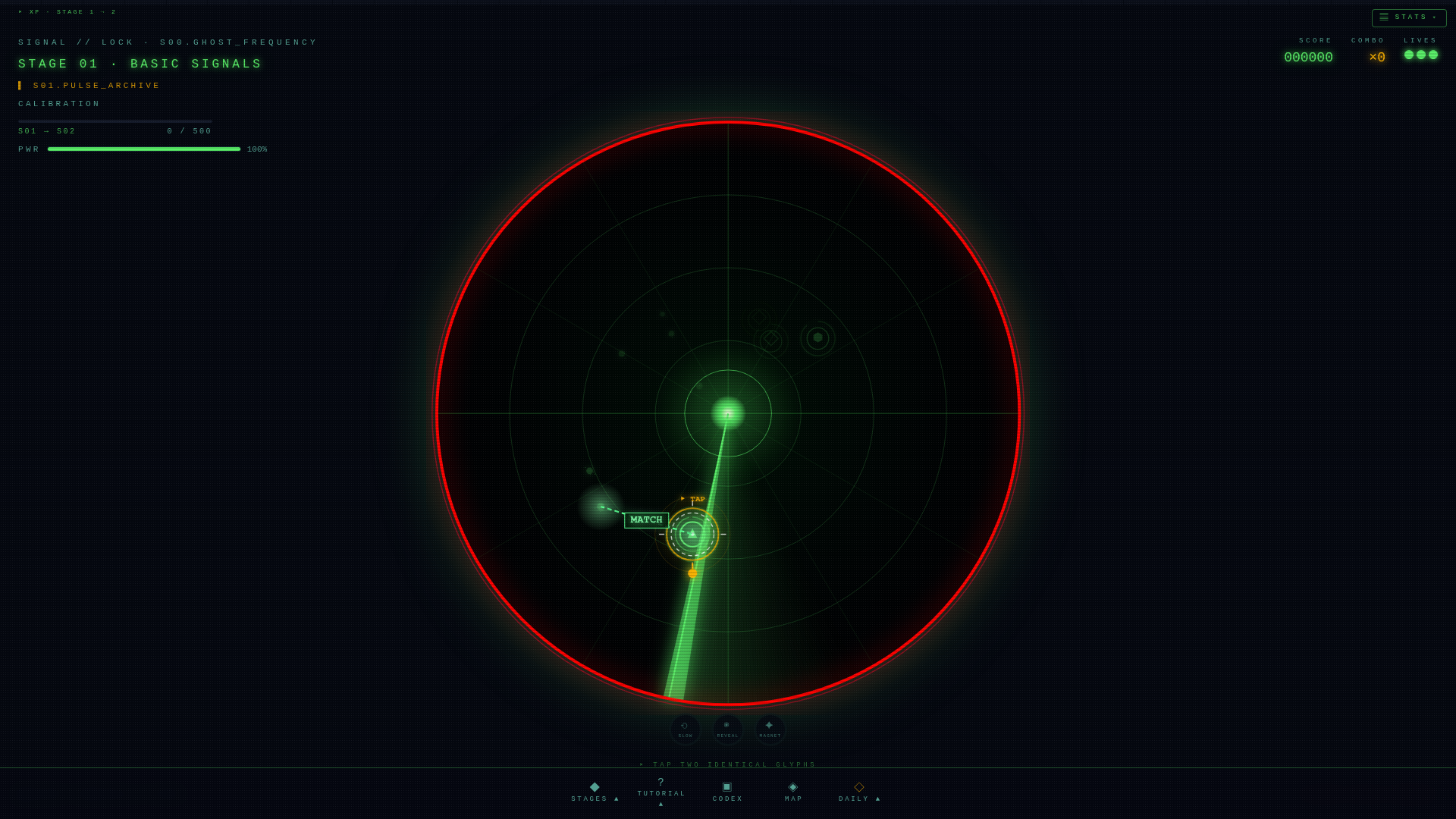
Step 1 — the pulse
The transmitter sends a microsecond-long burst of radio waves through a directional antenna. The frequency is usually somewhere between 1 GHz and 100 GHz depending on what the radar is looking for. Lower frequencies travel further and see through weather; higher frequencies give finer detail but get absorbed by rain. Aircraft radars sit around 8–12 GHz (X-band); weather radars around 3–10 GHz (S/C-band); car radars around 77 GHz.
Step 2 — the echo (range from time)
After transmitting, the same antenna switches to listen mode. Anything solid in the beam — a plane, a ship, a raincloud, a bird — reflects a tiny fraction of the energy back. The receiver times how long the round trip took.
range = (speed of light × round-trip time) ÷ 2
Light covers 300 metres in one microsecond, so a target 15 km away returns its echo about 100 microseconds after the pulse was sent. The radar can fire its next pulse and listen again before you finish blinking.
Step 3 — the sweep (bearing from antenna direction)
The antenna rotates (or, in modern systems, electronically steers) and tags every echo with the direction it was pointing when the echo came back. That gives you the second coordinate. Range plus bearing equals position, and a screen full of those is the familiar PPI scope — the green sweep you've seen in every aircraft carrier movie and every browser radar game.
Step 4 (optional) — Doppler for speed
If the target is moving toward or away from the radar, the returned echo's frequency shifts very slightly — the same effect that makes a passing ambulance siren change pitch. Measuring that shift gives the target's velocity along the radar's line of sight. This is how police radar guns, weather radar wind maps, and missile-warning systems work.
Why the display fades
On a real PPI scope the green afterglow is the phosphor itself — the screen literally keeps glowing for a few seconds after the electron beam paints it. Modern digital radars fake this fade in software because operators read a fading trail more easily than a hard-edged dot. The same convention drives the trail behavior in Signal//Lock — newer contacts are bright, older ones decay, and reading that decay is the core skill of the game.
Common questions
- Can radar see through clouds? Yes. That's its main advantage over optical systems. Heavy rain attenuates higher-frequency radars but most weather is transparent to S- and L-band.
- Can radar see stealth aircraft? Sometimes. Stealth shapes scatter X-band energy sideways instead of back toward the receiver, but lower-frequency radars (VHF/UHF) still get returns.
- What does RADAR stand for? Radio Detection And Ranging. The acronym was coined by the US Navy in 1940.
- How is sonar different? Same idea with sound waves in water instead of radio waves in air. Sound is millions of times slower, so sonar updates much less often than radar.
Related reading
- History of radar — from Hertz to Chain Home to your dashboard
- Sonar game — radar's underwater cousin
- Try a working radar in your browser
The four signal paths inside any radar
Every radar — civilian, military, weather, planetary — moves a signal through four stages: generation (a transmitter creates a pulse, usually with a magnetron, klystron, or solid-state amplifier), radiation (an antenna shapes and aims the pulse), reception (the same or a different antenna captures the reflected echo), and processing (a receiver demodulates the echo, measures range from time-of-flight, and bearing from antenna position). Modern radars do all four thousands of times per second.
Range comes from the speed of light: the pulse travels at roughly 300,000 km/s, so a return at 10 microseconds means the target is 1.5 km away (round-trip distance divided by two). Bearing comes from antenna orientation: if the rotating dish was pointing at 47° when the echo arrived, the target is at 47° relative to the radar. The combination of range and bearing is a polar coordinate, and the polar plan-position-indicator (PPI) display is its natural visualisation.
Pulse repetition frequency and the unambiguous range
A radar transmits a pulse, waits for the echo, and then transmits the next pulse. The interval between pulses (the pulse repetition interval, PRI) determines the unambiguous range: any target beyond half the PRI distance will have its echo arrive after the next pulse has already gone out, and the radar will confuse it with a near target. A 1 kHz PRF gives 150 km unambiguous range; a 10 kHz PRF gives 15 km. The trade-off is update rate vs. detection range, and modern radars solve it with multiple PRFs interleaved (staggered PRF) so they can resolve ambiguities by comparison.
Why Doppler matters
If the target is moving, the echo's frequency shifts relative to the transmitted pulse — the radar equivalent of the audible pitch change when a siren passes. A radar that measures this Doppler shift gets target velocity for free, and can distinguish moving targets from stationary clutter (buildings, trees, the sea surface) even when both produce echoes of similar amplitude. Every modern weather radar, every modern air-defence radar, and every modern automotive radar uses Doppler processing as a core capability rather than an add-on.